For most athletes, participating at the Dakar 2026 Youth Olympic Games will be a career milestone. But for one group in particular it will be a once-in-a-lifetime opportunity.
Dakar 2026 will mark the first time in history that a Refugee Youth Olympic Team is assembled for a YOG.
Organised by the Olympic Refuge Foundation (ORF) in partnership with World Athletics, the NOCs of Kenya and Uganda, and four national federations, try-outs for the team were held in February and November 2025.
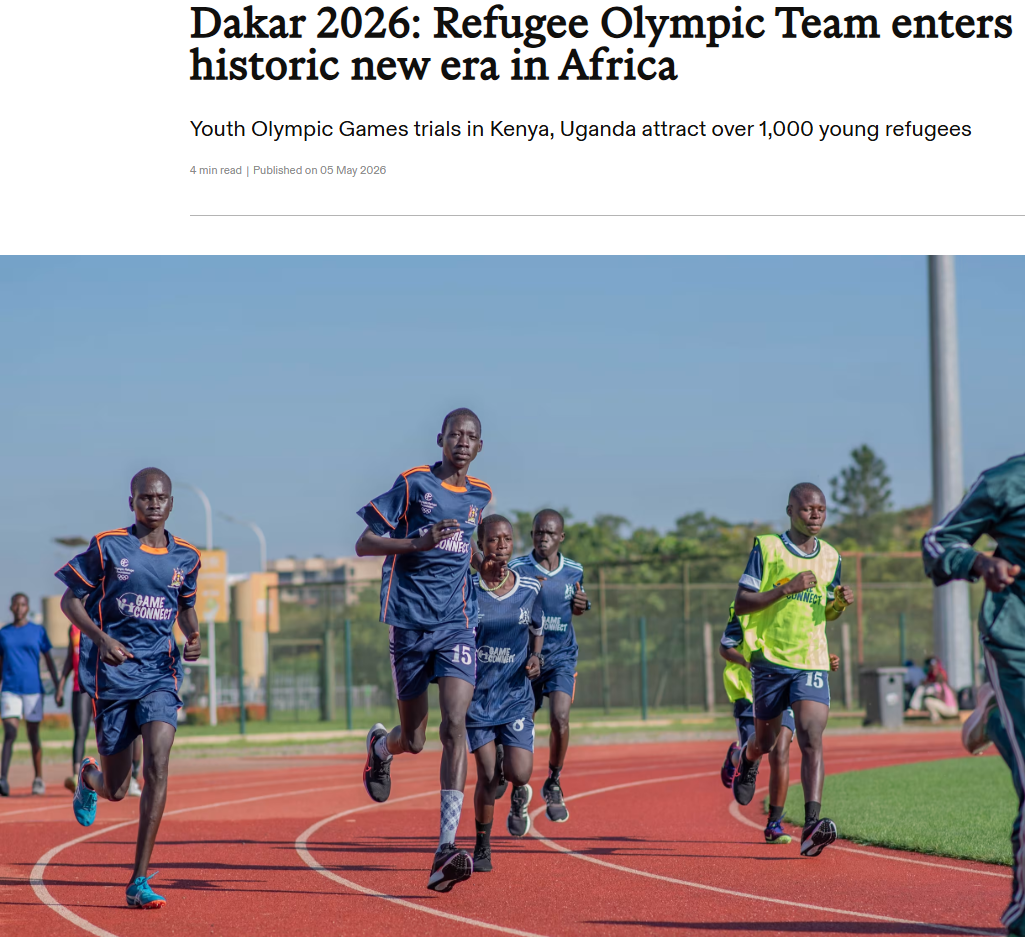
The response was overwhelming. Over 1,000 young refugees showed up for the open trials supported by World Athletics, which will oversee the lion’s share of athletes that make up the team.
“My first impression during the trials in Kenya was one of staggering resilience, determination, and the spirit to change their lives,” said Kenyan world champion and Olympic medallist Janeth Jepkosgei Busienei, part of the team of experts tasked with scouting and coaching the YOG hopefuls. “They arrived with nothing, sometimes training alone with no coach, but their natural endurance and mental fortitude were already at a world-class level,” she added.
It was a sentiment shared by Uganda Olympic Committee President Dr. Donald Rukare, who said the trials in his country had a profound effect on the refugees who took part. “You could see that sport had really empowered them, had given them a platform,” he said. “They were courageous, they were confident … For the first time you could see that it gave them hope, like sport might be able to transform their lives.”
In Kenya, one boy and one girl were selected in each of the eligible athletics disciplines for Dakar 2026, while in Uganda 12 additional runners made the cut. The Refugee Youth Olympic Team for Dakar will eventually be created from this pool of athletes, which also includes three taekwondo and three judo practitioners.
Home to over 47 million forcibly displaced people – more than half of whom are children – Africa is a focal point of ORF efforts to use sport to support young people affected by displacement. With two million refugees in Uganda alone, Rukare said that it was only natural that his NOC would play a leading role in organising the training camps.
“In our neck of the woods we are surrounded by a number of conflicts; we have been victims of conflict,” Rukare said. “Being open to people from different countries who are undergoing difficulties is really baked into our DNA.”
For World Athletics, the 2025 trials were part of a broader shift in strategy towards youth that the global governing body initiated a few years ago with the establishment of its first U20 athlete refugee team, according to Alice Annibali, Community Relations and Public Affairs Senior Manager at World Athletics.
Far from merely being a high-performance pathway to Dakar 2026, the federation’s work with the ORF aims to demonstrate that sport can also be used as a tool for inclusion, unity, and mental wellness among displaced people.
“Each milestone, whether participating in structured training, competing at national trials, or progressing toward international selection, creates a ripple effect,” said Lydia Murungi, project manager at Game Connect, the ORF-funded aid programme that led the recruitment drive for the open trials at refugee settlements throughout Uganda. “These stories reinforce the belief that refugee youth dreams are valid, achievable, and worth investing in, positioning sport as a catalyst for resilience, education, and future livelihoods.”
All the shortlisted refugees are now being supported with Youth Athlete Development grants from Olympic Solidarity that will provide training assistance and “life fundamentals” like financial literacy, nutrition, and education. They are also receiving mentorship from such sporting giants as double-Olympic marathon champion Eliud Kipchoge of Kenya.
To help prepare the athletes for the international stage, the refugees will participate in at least two existing national youth championships in Africa in the lead-up to the YOG. They are also scheduled to take part in a training camp jointly hosted by the ORF and World Athletics in 2026.
As the countdown continues to the first Olympic event ever held on African soil, Dakar 2026 now represents a tangible goal for these athletes. And with every training session, every step towards their goal, the young refugees are rewriting their personal stories, no longer defined as where they came from but where they are going.
Like the Post? why not Share!
LATEST NEWS
*******
-
Legacy Holders Crowned Champions at Swans Beach Rugby Against Cancer Festival 2026.14 Oct 2026
-
UOC Joins National Mental Health Run, Calls for Greater Investment in Youth Well-being.13 Oct 2026
-
Dr Donald Rukare Joins Global Sports Leaders to Discuss the Future of Major Sporting Events.08 Oct 2026
-
Eliud Kipchoge to Inspire the Next Generation as Dakar 2026 Global Ambassador.29 Sep 2026