
LATEST NEWS
*******
-
 Cricket Uganda’s women’s T20 Elite League returns.28 Jan 2026
 -
 Waterfalls Elite Women’s League 202628 Jan 2026
 -
 Cricket Uganda prioritizes pathways, prudence and performance in 2026 calendar.26 Jan 2026
 -
 NCS Stands firm on registration law, warns non-compliant federations of funding ban25 Jan 2026
 -
 FUBA appoints Goran Lojo as new Silverbacks head coach21 Jan 2026
 -
 UOC President lays out roadmap to LA 2028, Glasgow 2026 and beyond in new year address.20 Jan 2026
 -
 Micheal Wokorach draws the curtain on the glorious rugby careeer.19 Jan 2026
 -
 Uganda Aquatics maps out 2026 agenda18 Jan 2026
 -
 Uganda Names 12 Juniors for ITF/CAT Eastern African Junior Championships 202612 Jan 2026
 -
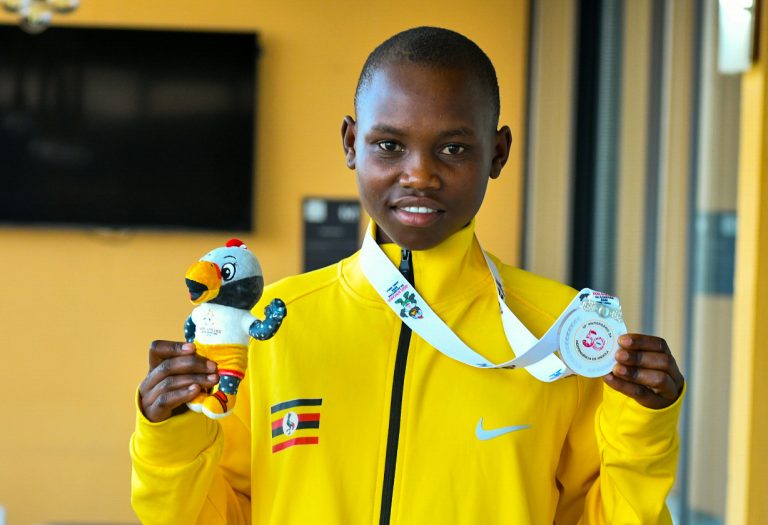 Baskaline shines for Uganda with silver as Uganda takes its tally at the African Youth Games to four14 Dec 2025
 -
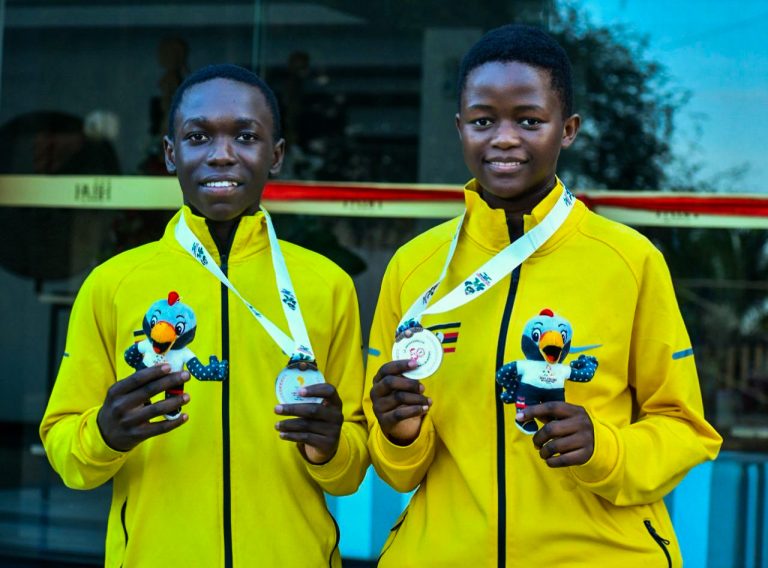 Uganda shines with table tennis and aquatics bronze at African Youth Games 202513 Dec 2025
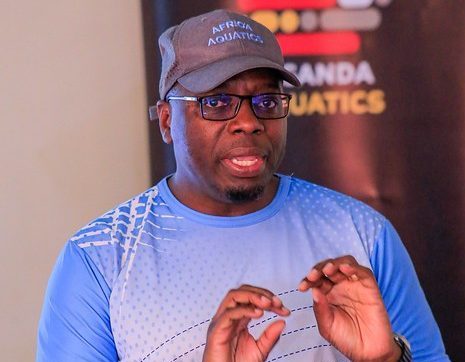
Uganda Aquatics maps out 2026 agenda as compliance, facilities and quality take centre stage
Uganda Aquatics opened the new year with a wide-ranging engagement with its stakeholders, outlining key priorities around legal compliance, long-term planning, facilities development, competition quality, capacity building and athlete safety.
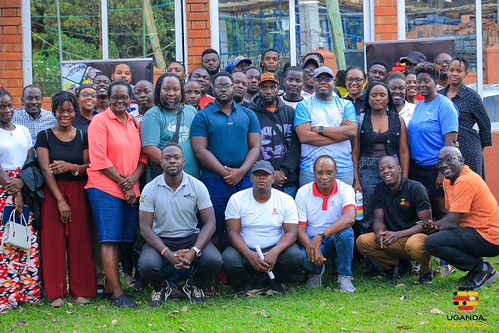
The meeting, held at the start of the year, brought together club administrators, school heads and managers, and coaches. According to federation leadership, the primary goal was consultation and alignment on issues that directly affect the governance and growth of aquatic sports in the country.
Compliance with the Law Still Ongoing
One of the major updates shared concerned Uganda Aquatics’ compliance with the national sports law. The federation informed stakeholders that its licensing process with the National Council of Sports (NCS) is still ongoing, as additional adjustments have been requested.
In addition, Uganda Aquatics has received draft national facilities guidelines and regulations from NCS, which require feedback by January 19. A consultative meeting for all national federations has been scheduled around January 21 at Copper Chimney. These regulations have come at a time when the federation had already begun discussions on introducing uniform rules for hosting competitions, meaning the two processes will now be reviewed together.
Strategic Plan 2025–2032 Takes Shape
Stakeholders were also updated on the federation’s eight-year strategic plan covering 2025 to 2032. Progress so far has been described as positive, with close to 150 stakeholder responses already received. The federation had initially targeted 300 responses, but now hopes to reach at least 200.
“The plan is being developed with guidance from consultant Michelle L, and a Special General Meeting is expected in about a month to finalise outstanding areas. Members have been challenged to think long-term about where they want Uganda Aquatics to be in the next seven to eight years.” Said the Uganda Aquatics President Moses Mwase
“The overarching goal is to produce higher-quality swimmers capable of winning medals, qualifying for international competitions and making Uganda proud, while building a well-run, progressive federation with satisfied athletes and stakeholders.” He continued.
Five Acres of Land Secured for Aquatic Centre
A major highlight of the meeting was the announcement that Uganda Aquatics has secured five acres of land from Seroma Christian Schools. The land, located near the school, has been leased at no cost as part of a partnership arrangement.
The federation plans to work with Wild Aquatics to establish swimming facilities on the land while broader plans for a national aquatic centre are developed. Discussions with Wild Aquatics are expected to be concluded soon, after which a formal ceremony and press announcement will be made.
Although Seroma is some distance from the city centre, the federation believes improving road access and long-term planning will make it a viable location for a national facility.
Three-Year Calendar and Event Reforms
Uganda Aquatics also presented its new three-year competition calendar, which is designed to align closely with the strategic plan. The emphasis is on quality, capacity building and better-regulated competitions rather than simply increasing the number of events.
The calendar includes swimming, open water and water polo, with the possibility of demonstration events for artistic swimming and diving in the future. Uniform regulations for club competitions will be introduced, and compliance with upcoming NCS regulations will be mandatory.
Fees Revised After Years of Minimal Charges
Membership and athlete fees are set to increase after many years at minimal levels. Club membership fees are proposed to rise from UGX 250,000 to UGX 400,000 per year, while athlete registration fees may increase from UGX 10,000 to about UGX 50,000, alongside adjustments to other charges.
Tighter Heats, Higher Standards at Nationals
To address congestion at national events, Uganda Aquatics plans to significantly limit heats, especially in long-distance races such as the 800m and 1500m. These events will now largely be contested in leagues, with only the top-ranked swimmers qualifying for a single heat at nationals.
The federation has reverted to a four-day national competition format, after a five-day trial failed to solve congestion issues. Motivation times released on December 20 for the 2025–2032 period will serve as benchmarks, and qualification times for national events will be raised accordingly.
Growing the Sport Beyond Clubs
While club swimming remains the current focus, the federation acknowledged the need to expand swimming in the regions. Uganda Aquatics plans to explore regional competitions and development structures, although limited facilities remain a major challenge.
NCS has given the federation five months to put certain structures in place, adding urgency to these efforts.
Capacity Building for Coaches
Coaching development emerged as a key pillar of the strategy. Uganda Aquatics plans to revive an annual coaches’ convention, alongside regular Level One, Two and Three courses based on a standardised coaching curriculum, which is currently lacking.
Coaches will be required to meet minimum annual training hours to receive certification and identification, as the federation strengthens supervision and regulation.
Commonwealth Games Preparation
On preparations for the Commonwealth Games, Uganda Aquatics confirmed that team selection has not yet begun, as quotas are still to be communicated by Commonwealth Sport Uganda. A new quarterly ranking system, listing the top 10 swimmers in each age category, will be used to guide selections once allocations are confirmed.
At the last Commonwealth Games in Birmingham, Uganda fielded four swimmers (two male and two female) and one para swimmer.
Safety a Top Priority After Egypt Tragedy
Safety at competitions was heavily emphasised, particularly following the incident in Egypt where a swimmer died after reportedly being unnoticed at the bottom of a pool for several minutes.
Uganda Aquatics announced that all event hosts will be required to sign off on minimum safety guidelines, covering facilities, officiation and event management. These guidelines will be issued within one to two weeks and aligned with NCS facility regulations.
The federation stressed that protecting athletes is non-negotiable, noting that injuries or incidents at club events affect national teams and the sport as a whole.
On a whole, the stakeholder engagement was described as long but productive, setting a firm foundation for a demanding but ambitious year ahead for aquatic sports in Uganda.